Glorious Ghana - Textile & Craft Tour
Embark on an extraordinary tour through Ghana’s rich textile and craft heritage, where weaving, basketry, bead-making, and indigo dyeing come to life
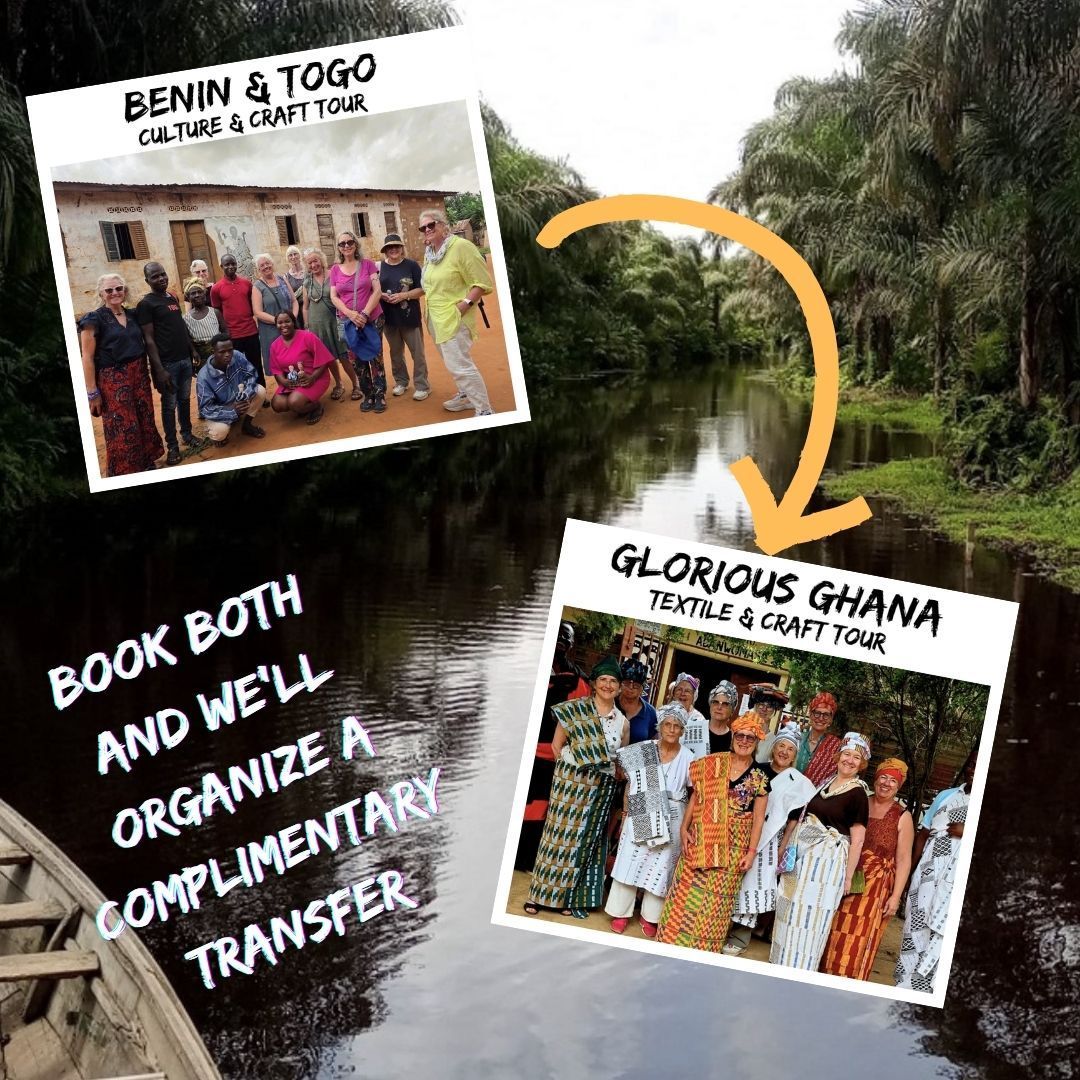
BONUS: Book Benin & Togo and Glorious Ghana Tours and we will organise complimentary land transfer between Lomé and Accra.
22 Aug - 5 Sept 2027
From
Duration
15 days / 14 nights
Glorious Ghana -
Explore the vibrant culture of Ghana, once the seat of the powerful
Ashanti Kingdom and now a beacon of stability and progress in Africa.
Join us as we delve into the heart of Ghana’s textile and bead-making traditions.
Witness traditional methods in action and participate in hands-on workshops to create your own unique treasures.
From weaving and batik to indigo dyeing and beadwork, discover a diverse range of artisanal crafts.
Support fair-trade practices and empower local artisans as you immerse yourself in this culturally enriching experience.
Expand your collection of materials for your projects back home and dive into the intricacies of these time-honored crafts.
Get ready to get your hands dirty and immerse yourself in this unforgettable, hands-on experience. Don’t forget to bring an apron!
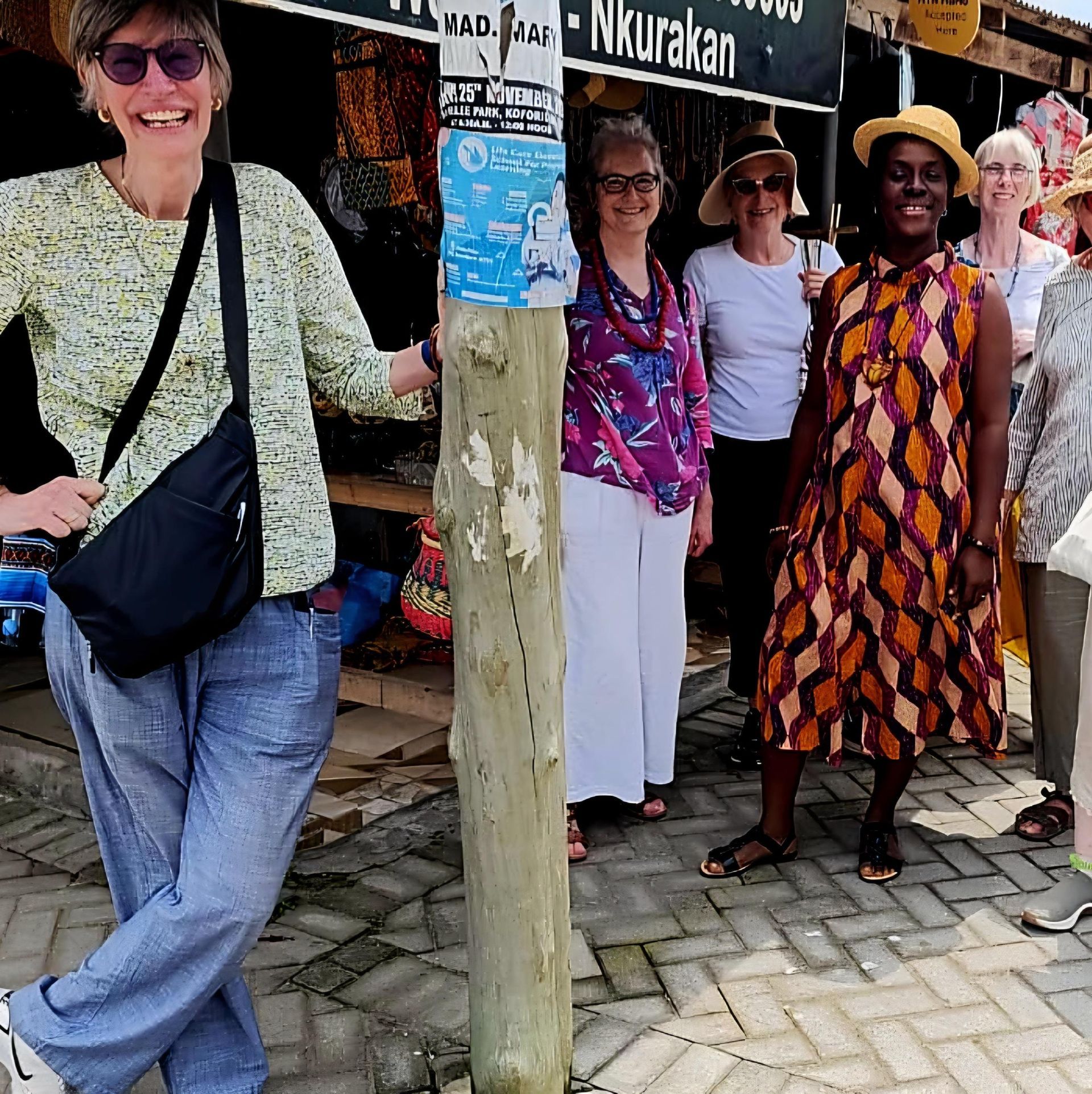
Day 1 - Accra (22 Aug 2027)
Arrivals - Kotaka International Airport, Accra, Ghana
We will collect you anytime day or night.
Hotel check-in time is in line with hotel policy, typically 2.00 pm
Day 2 - Accra (23 Aug)
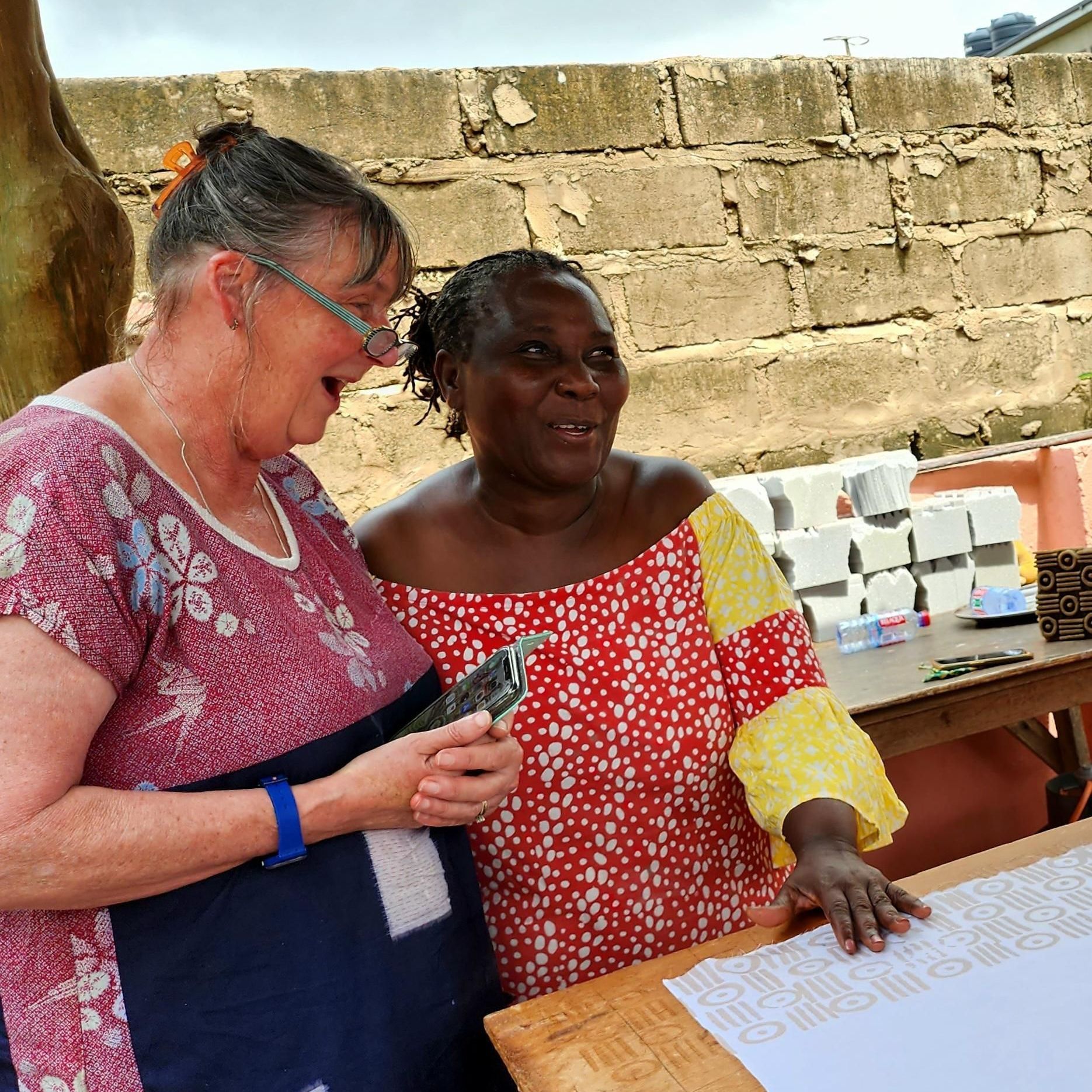
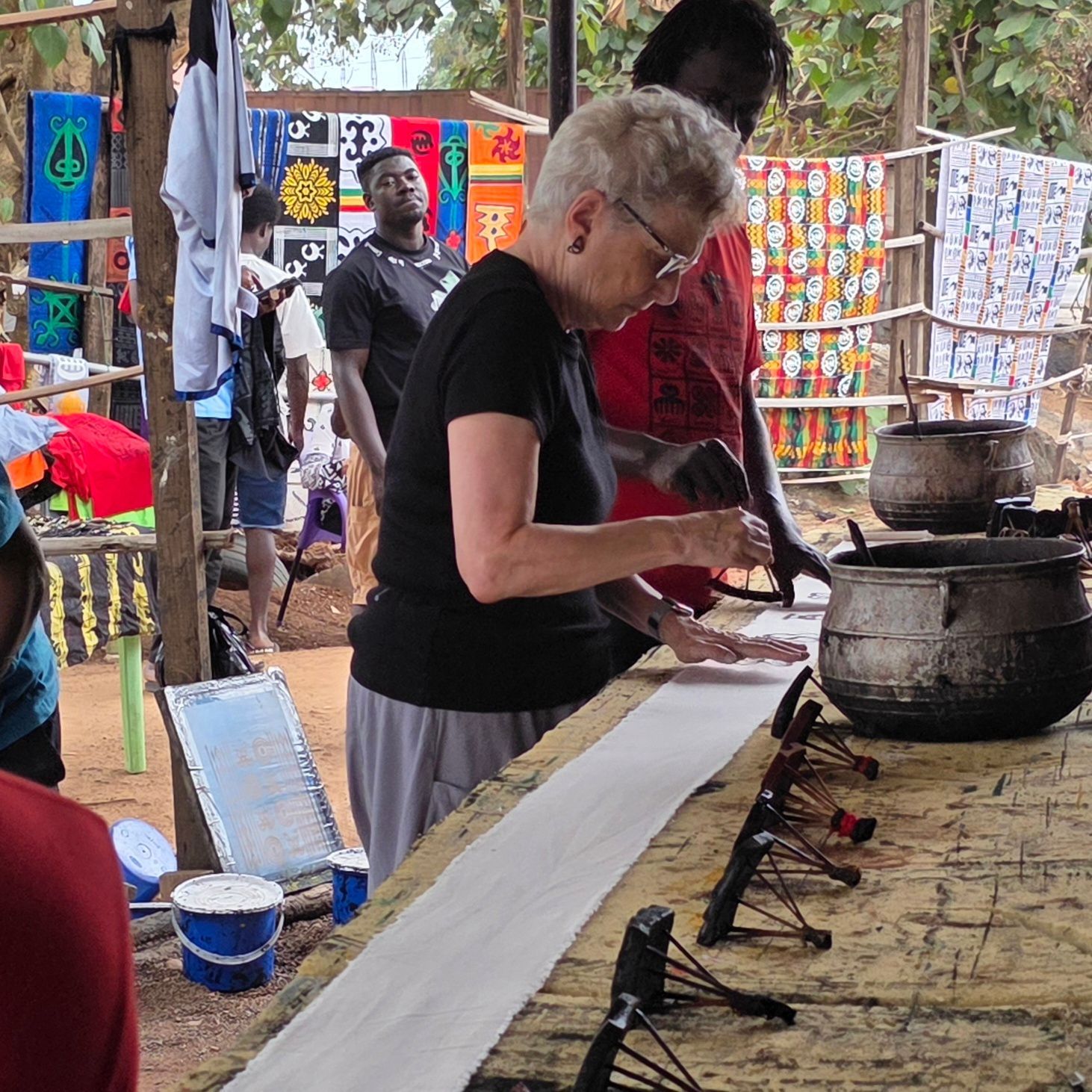
Bring your apron, we are straight into a batik workshop with Esther. Batik; rich, multi-layered batik is a highly desired dress material in Ghana and our teacher’s business produces some of the best around.
By the end of the day you’ll have printed and dyed 2 metres to take home with you and had a wonderful home cooked lunch.
Coffin viewing in the afternoon– these are not just any coffins but works of art!
We will visit the studio of the inspiring artist Tei Huagie- be prepared to be amazed.
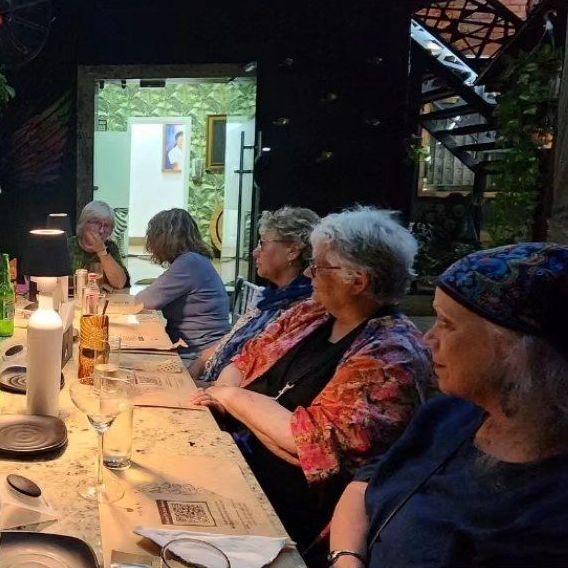
Let's share a Welcome dinner together, tonight.
B,L,D
Day 3 - Atsiekpoe (24 Aug)
We are visiting village of Atsiekpoe, a beautiful spot on the Volta River, The small village of Atsiekpoe consists largely of termite clay houses with thatched roofs. On the lively riverbank where it is situated, local fishermen prepare their boats and nets, children play and swim, and women do their laundry.
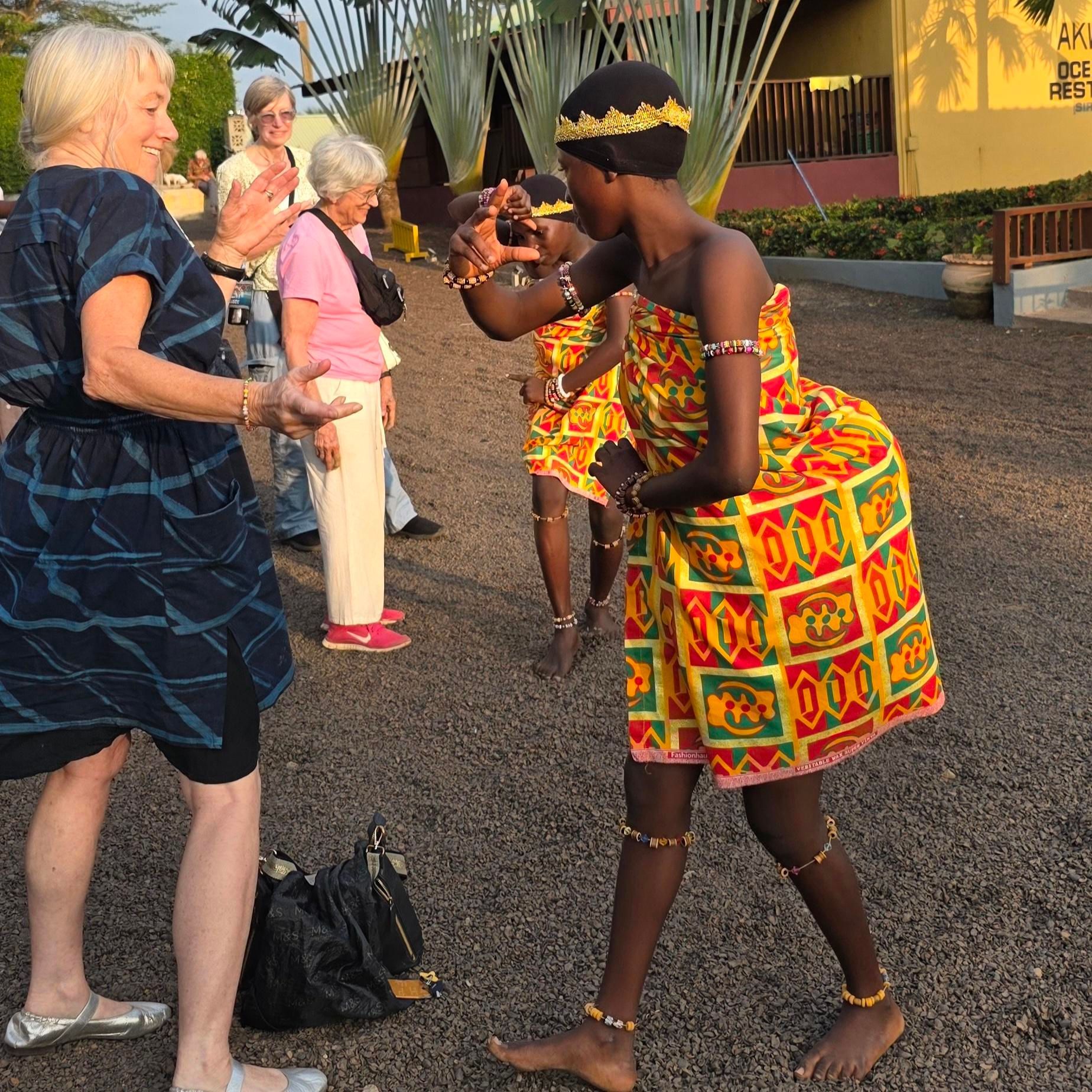
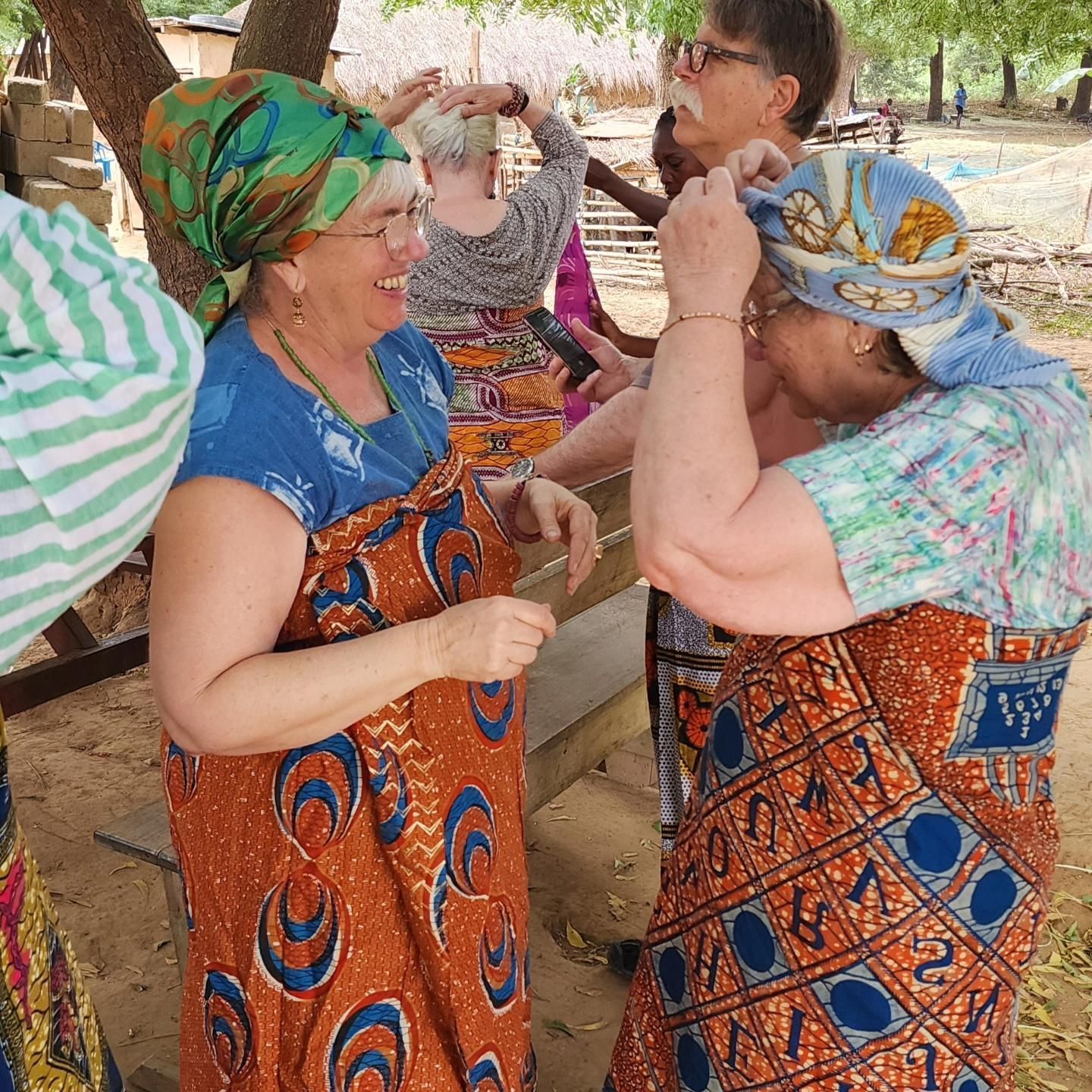
Cultural immersion- cook class and lunch- delicious Red Red Beans and accompaniments, stroll through the village, checkout the clinic that is improving women’s health and have some fun learning how to tie hair wraps and body wrappers.
We stay on the banks of the Volta Lake at Atimpoku.
B,L,D
Day 4 - Korfuidua (25 Aug)
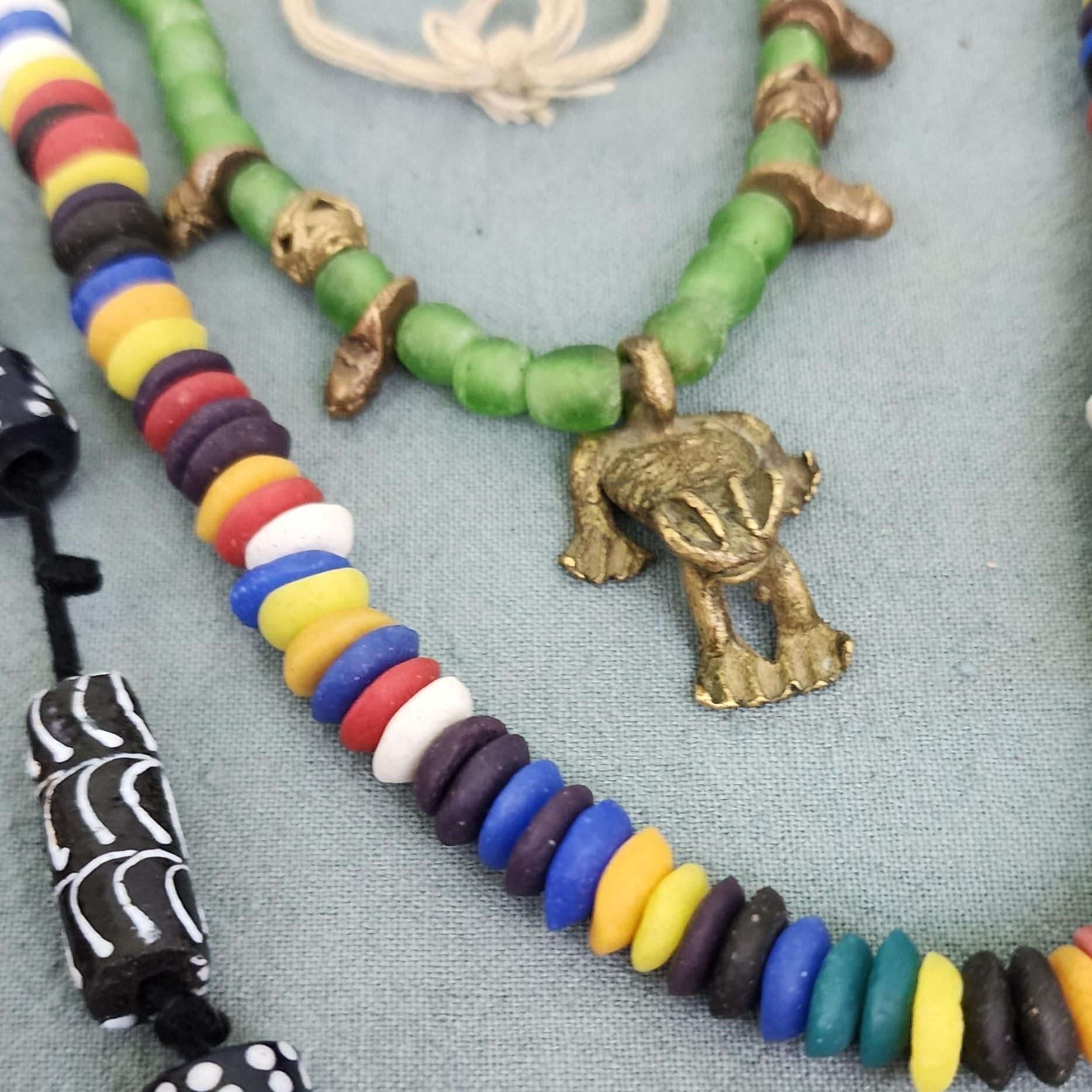
Korfuidua is hand-made bead central for Ghana and most of West Africa.
We are visiting a women’s self help group for a jewellery making workshop using some of the locally made upcycled glass beads.
Oklah is taking us up on the ridge to a Krobo Village to see bead making, it is a busy day with everyone getting ready for tomorrow's market but lots to see and people will kindly take a minute to stop and explain wheat they are doing.
B, L,D
Day 5 - Accra (26 Aug)
This morning we are heading to the Koforidua bead market. Held weekly it is a treasure trove for the bead addicted and the centre of the bead trade in West Africa and increasingly international clients as well.
The afternoon will find us back in Accra.
Afternoon free- there is a lot to explore in our area of Osu, Accra.
B,L
Day 6 - Tamale (27 Aug)
After an early start and short flight we are heading to the north Sahal region, this area is dry grasslands and very different to the southern coastal region. This area is renowned for its arts, crafts and traditional architecture.
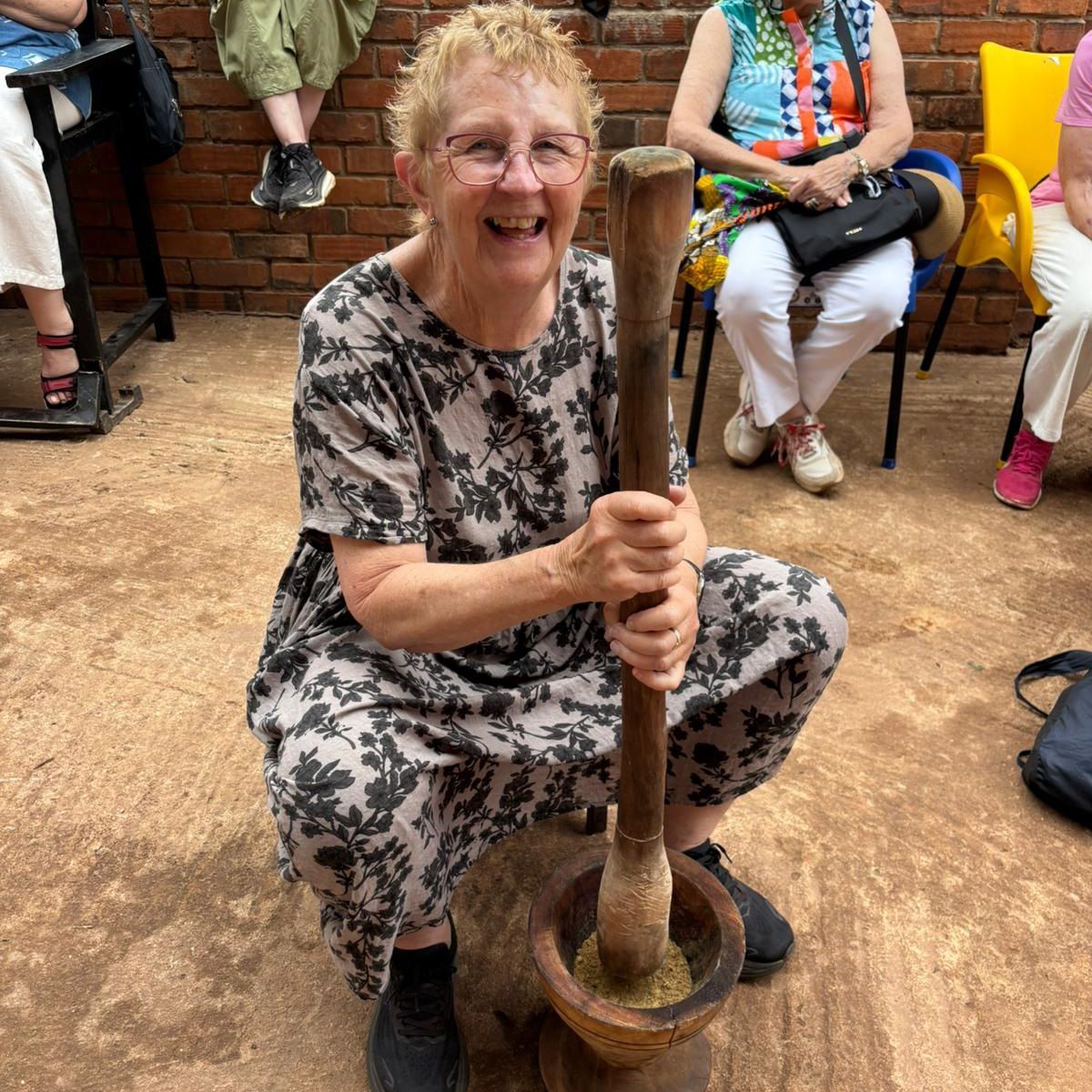
Learn about Shea Butter production- the Sahal area is where they grow. We’ll have a hands-on workshop- crack those nuts.
We’ll head off to the leather markers village and visit leather tailors.
B,L,D
Day 7 - Tamale (28 Aug)
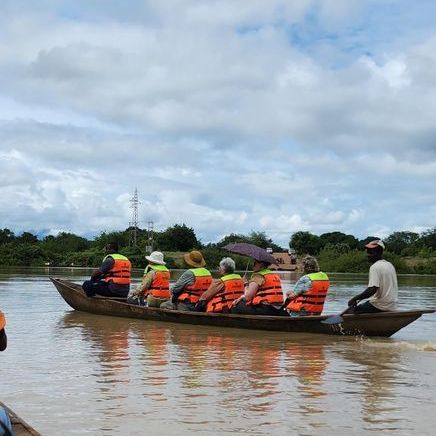
Today is a real adventure: we’ll visit the isolated village of Daboya, west of Tamale, after we cross the White Volta River by dug-out canoe.
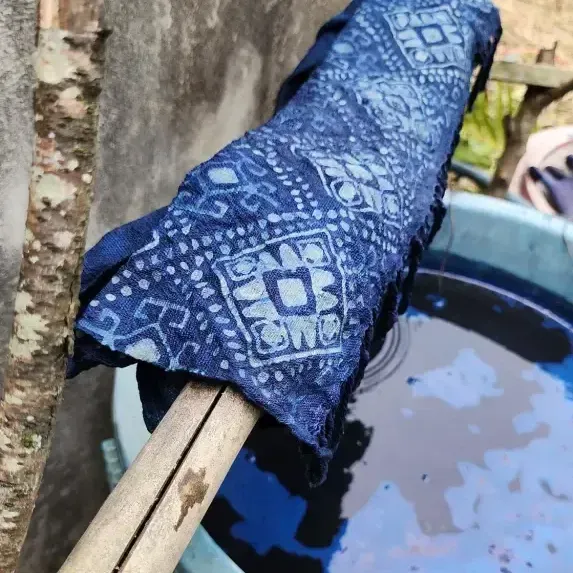
We’ll need dash to gift the chief and then wander the village to view strip weaving and indigo dyeing.
“Daboya strips” are used throughout northern Ghana to make the distinctive smock worn by the men of the region.
Definitely off the tourist trail, Daboya feels like we are stepping into the past as we cross savannah where the shea trees grow.
NEW- I have lovely hand-made cotton scarves from my weaver in India- I’ll bring you each one and we can ask the guys to dip it into their indigo vat for us.
B,L,D
Day 8 - Tamale (29 Aug)
Beautiful grass baskets are woven around here and the indigo thread we saw in Daboya is transformed into smocks. We will visit the smock market deep inside the local market.
Lunch will be a cooking class based on local specialties with Chef Dee.
In the afternoon we will visit a contemporary art studio of the internationally known Ghanaian artist Ibrahim Mahama. His Savannah Centre for Contemporary Art – opened 2019 – has recently extended its platform with the Red Clay Studio. Very exciting undertaking
B,L,D
Day 9 - Kumasi (30 Aug)
Starting south today we go to Kumasi, a big drive watching the scenery change from the semi-arid north to the more fertile Kumasi region and a lovely waterfall.
Check out Kintampo Falls along the way.
B,L,D
Day 10 - Kumasi (31 Aug)
Kumasi, home to the legendary Ashanti kingdom and heart of traditional crafts and culture of Ghana. This is a base for a few days to explore the region.
Today is all about Ashanti culture and history, crafts and stories as well.
Ashanti Palace Museum to start the day.
The sprawling Ketejia Market this afternoon …delve into the enormous Central Market at the heart of Kumasi [it boasts to be biggest in West Africa!]….it seems literally anything is possible in this market even things you never dreamed could be there…textiles, food, second hand goods, the odd fetish item or 100– parrot wings, dried bats, vulture heads all those things to stock the cupboard back home!
Great place to buy African Wax Print fabrics.
A lazy afternoon after lunch to relax.
B,L
Day 11 - Kumasi (1 Sept)
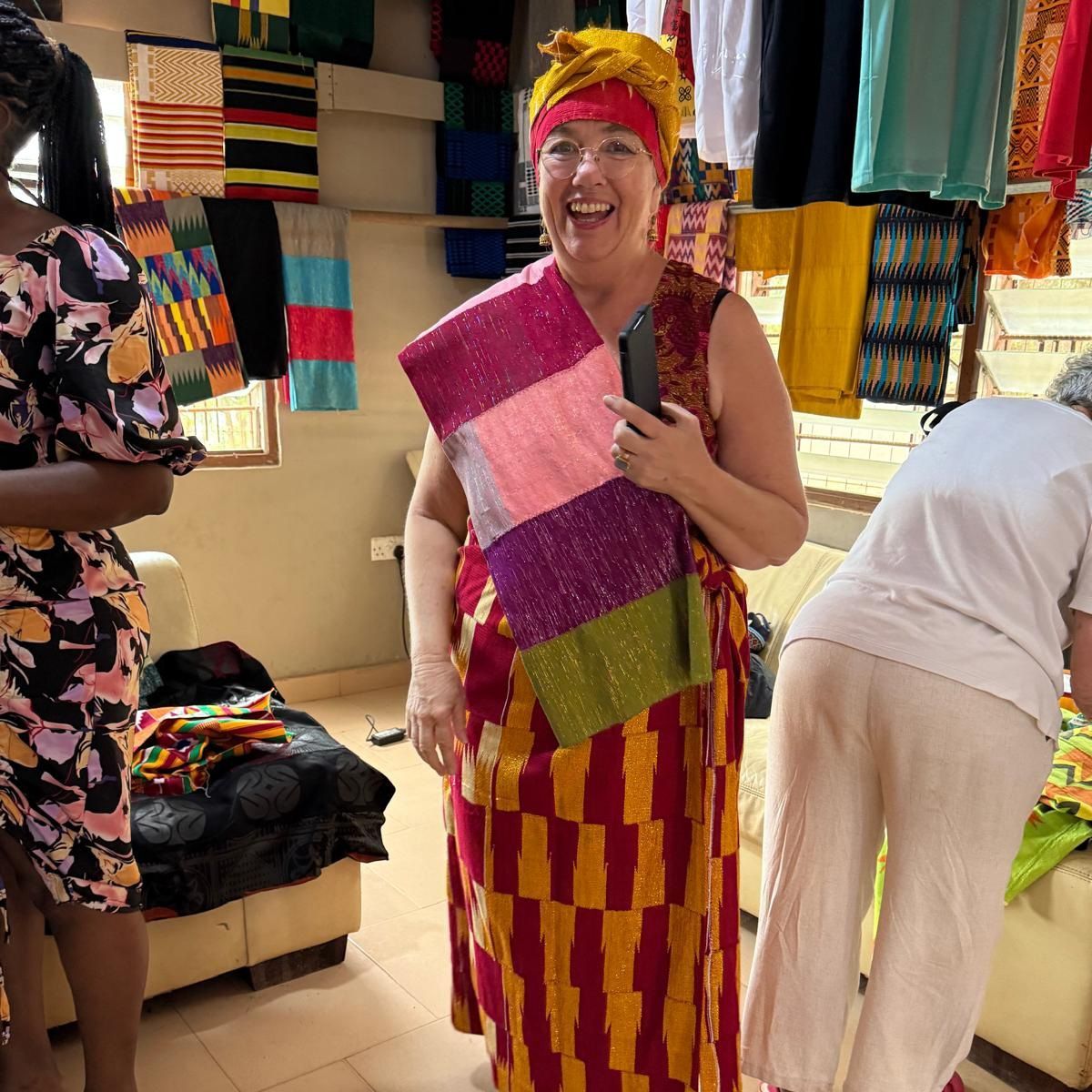
An early visit to a weaving village to see Ashanti Kente weaving– this village is special also for the responsible approach to tourism– a well-informed info centre and a village that believes tourists should be able to wander around in peace and appreciate their village.
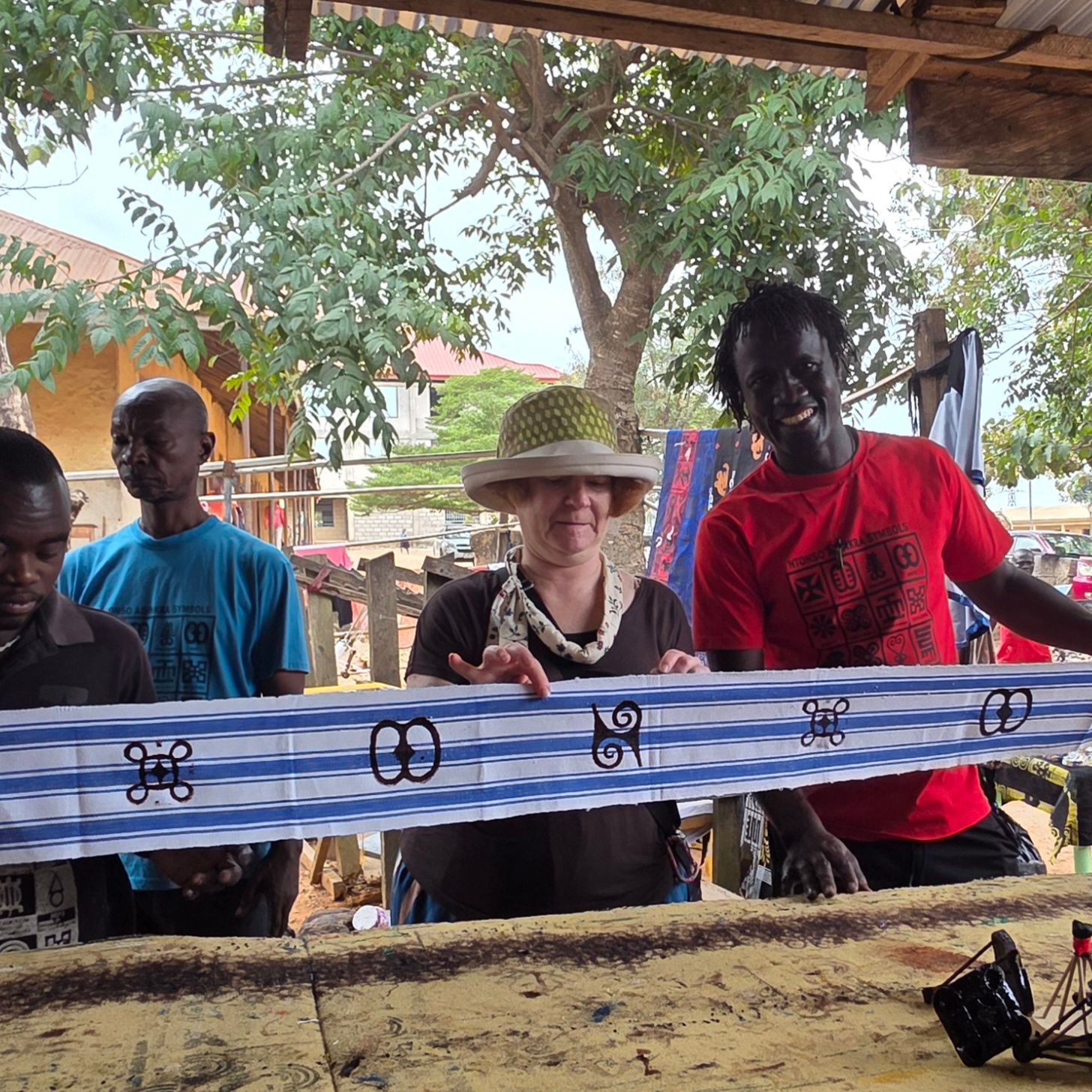
Adinkra Printing workshop [ Adinkra means talking and each symbol associated with this style has a clear meaning, so your choice of symbols imparts a lot of information]. Gabriel and his family still source bark from up towards the Sahara to make the traditional inks.
B,L,D
Day 12 - Elmina (2 Sept)
Head off to Cape Coast today.
Along the way we will visit a women’s co-operative that makes Gari Foto [made from dried and grated yam it is an ‘instant’ meal that tastes delicious and is said to fuel university students because it is also cheap to buy]
They also press and process red palm oil- got to admire how hard they work.
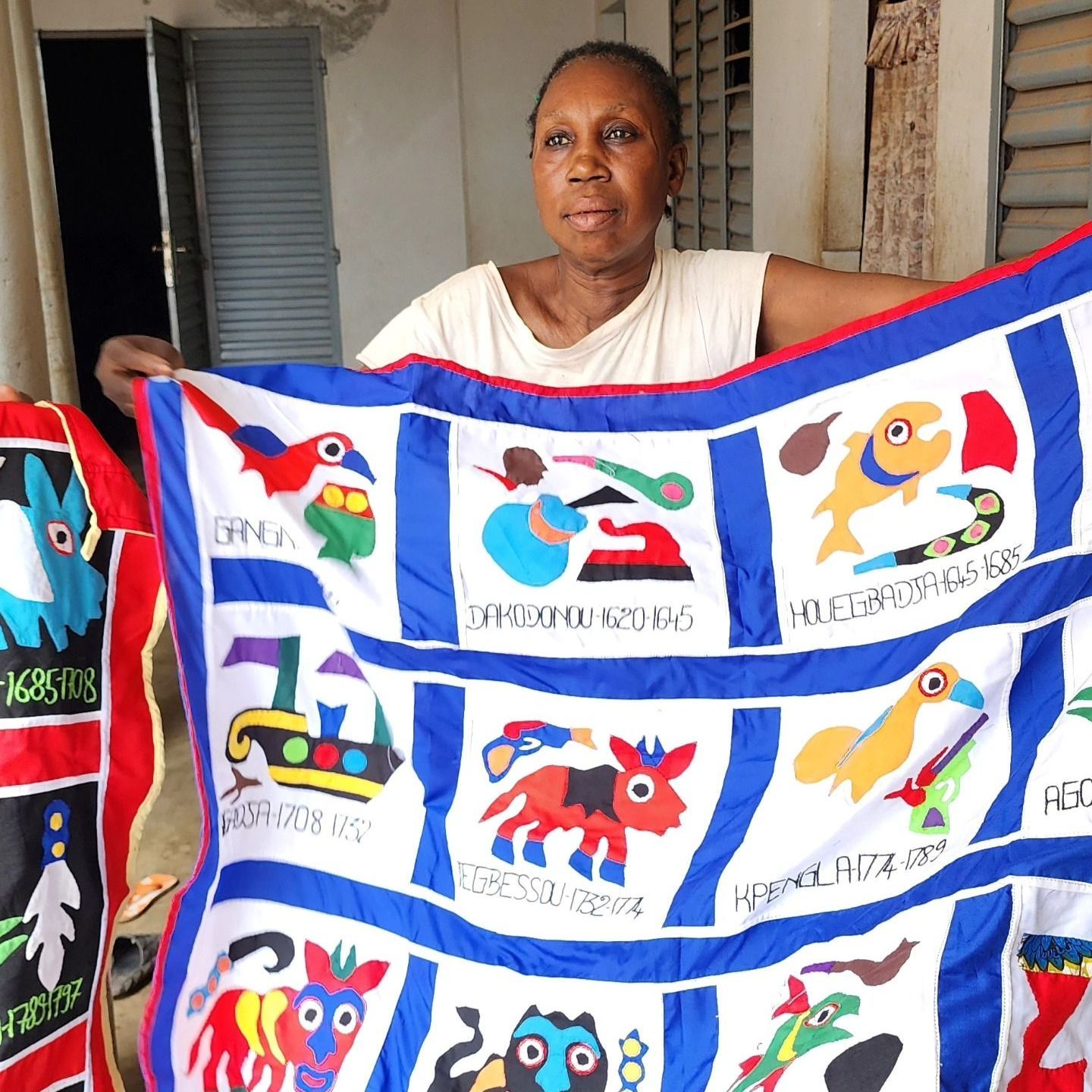
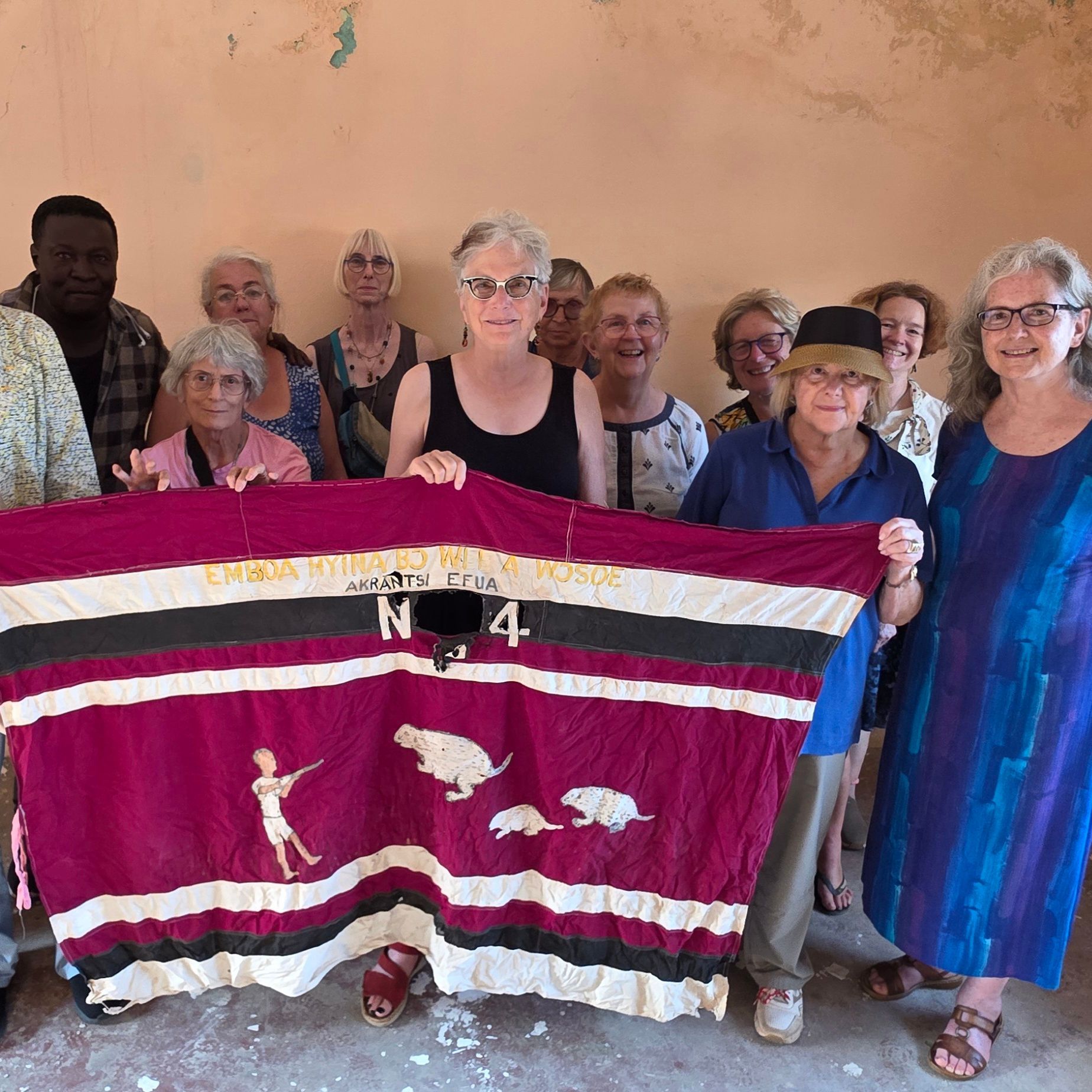
This area is famous for its Fante Asafo Flags- appliqued flags of various warrior groups, last visit we were lucky enough to be invited to a flag viewing and hope we can repeat it, it depends on the honourable, elderly gentleman responsible for his troupes’ flags- we will try.
B,L,D
Day 13 - Elmina (3 Sept)
Today is about African time…taking it easy at a beach side resort, we will check out the history of the area, this coast was once the centre of the nefarious slave trade.
Cape Coast and its castle has been possessed by many European nations in its history and is a now a world Heritage site- lots to explore.
Visit Global Mamas an inspiring Fair Trade women’s business.
B,L,D
Day 14 - Accra (4 Sept)
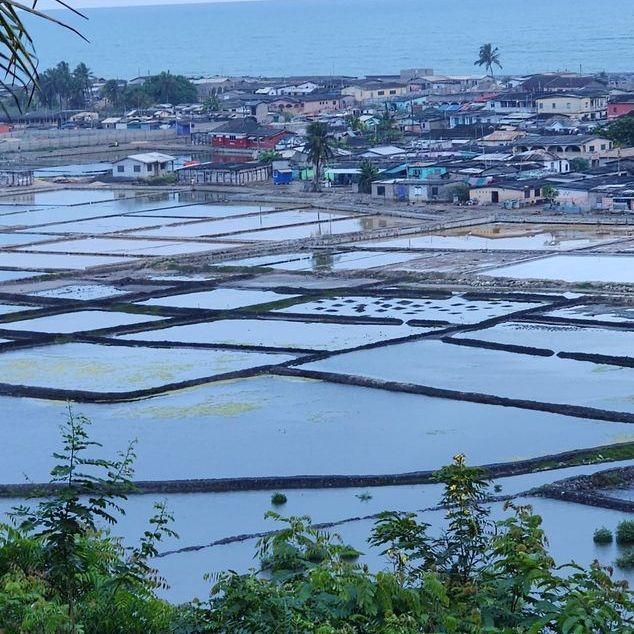
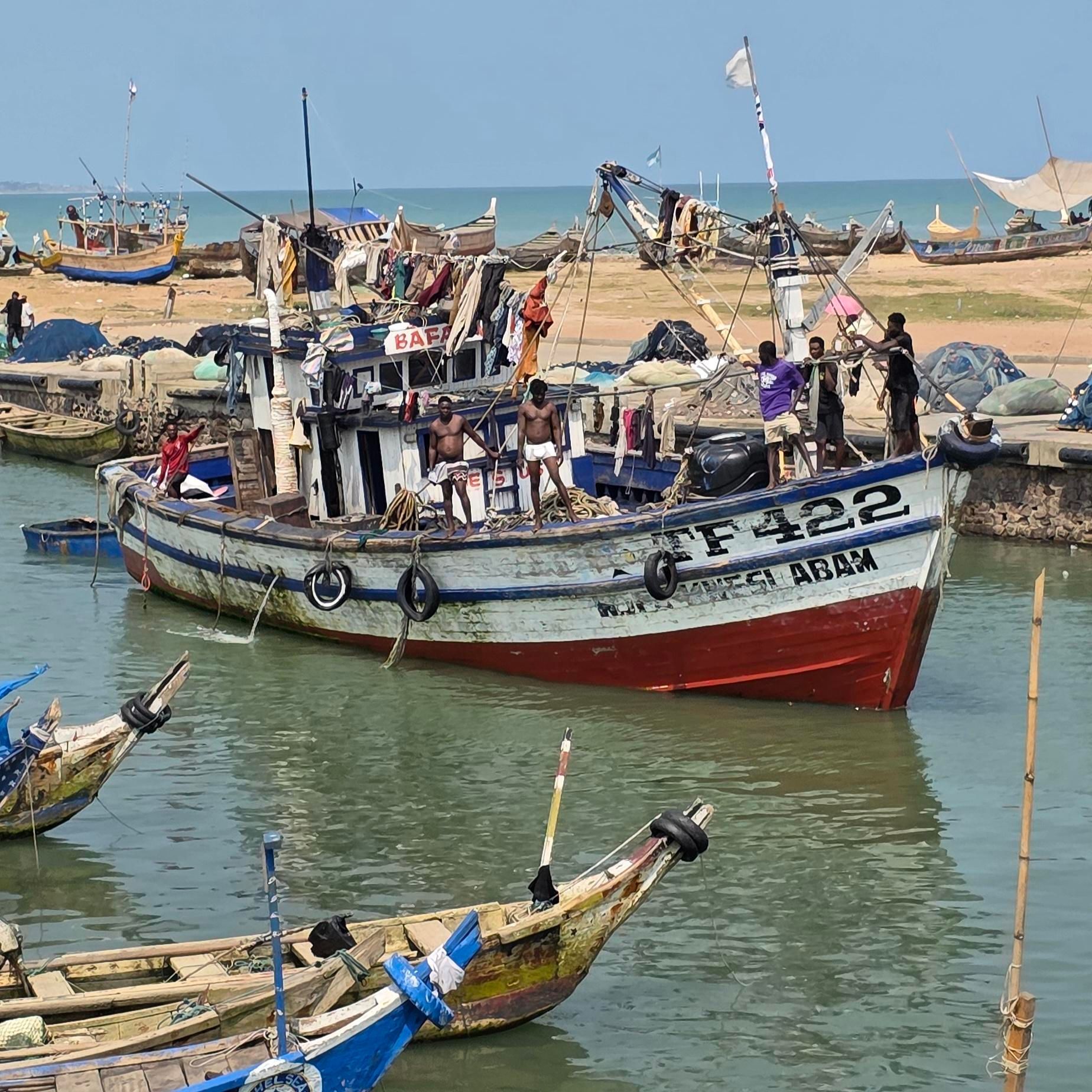
Picturesque Elmina Fishing Port
and then up to Accra.
Afternoon free for all your last minute shopping.
Let's share a Farewell Dinner this evening.
B,L,D
Day 15 - Departures (5 Sept 2027)
Departures from Kotaka International Airport in Accra..
We will drop you to the airport to meet your flight.
Hotel check-out time is in line with hotel policy.
B
Fitness
Physical Fitness for Sightseeing
This adventure is crafted for enthusiastic, active travellers with a good general level of health and mobility.
To make the most of your experience, you’ll need to be comfortable walking for 3–4 hours a day — sometimes over uneven ground, up hills, and climbing a few flights of stairs.
You may also find yourself getting in and out of local transport and navigating the occasional over-the-bath shower.
If you enjoy a bit of daily movement and love discovering new places on foot, you’ll thrive on this tour.
Just a friendly heads-up: we need to walk at an average pace - it will not be suitable for those who prefer a slow pace or need frequent rest stops.
Destination Details
Etiquette
• West Africa is friendly and welcoming, but people generally do not like having their photo taken
• You may be told very directly to stop
Do not take photos of people without permission
• Taking photos of people – how would you feel with a camera in your face?
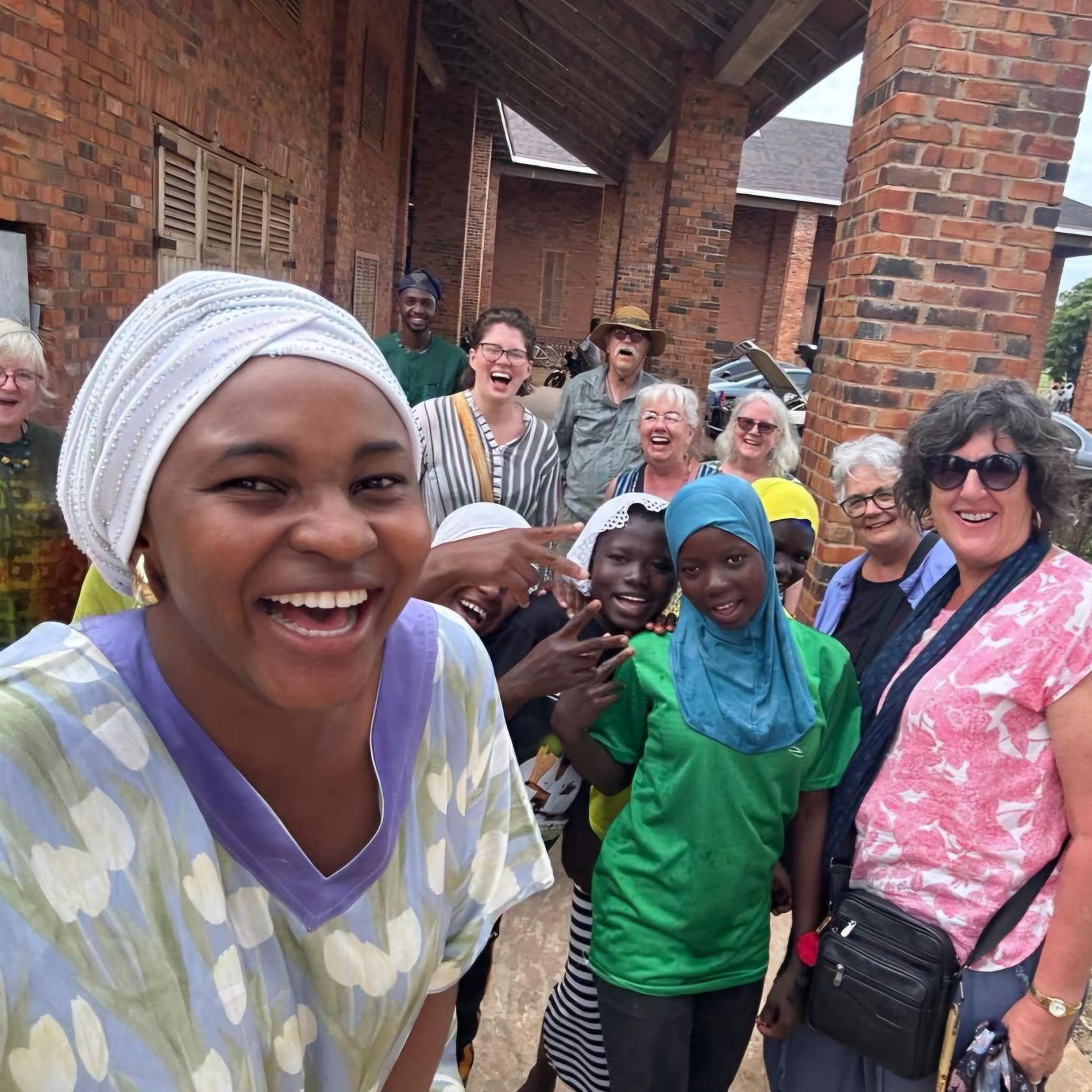
• A better approach – say hello first. Many people enjoy a selfie; ask for a group photo, show them, then ask for a portrait – works a charm
• Try to learn a few local courtesies – always appreciated
Note
• Yellow Fever vaccination is mandatory – carry your certificate with you
• Or a doctor’s certificate for vaccination exemption
________________________________________
Workshops
• Our hosts enjoy seeing what you’ve made – bring a little show and tell
• An apron for batik day can be useful
________________________________________
Food
• Food is an integral part of culture – we are here to try it all
• Group meals are shared, with a range of dishes and local specialties
• In Ghana, food is cooked from scratch using fresh ingredients
• Vegetarian – limited options (red red beans, rice dishes, starches)
o Protein is usually served separately – manageable, but expect repetition
• Vegan – more challenging, but possible (dairy is not widely used)
• Onion / garlic free – difficult to manage
• Wheat free – generally easy
________________________________________
Health
• Yellow Fever inoculation is mandatory for West Africa and Ghana
• Drink only filtered or bottled water – not tap, even for brushing teeth
• Aim for at least 2 litres of water daily
• Visit your doctor or a travel specialist before departure
• Bring required medications and prescriptions
• Menstrual products – pads available, tampons less so
• Bring insect repellent
________________________________________
Money
• Notify your bank before travel (including transit stops)
• Travel cards can be useful – check they work before departure
• Carry a backup card, stored separately
• ATMs – generally available
• Cash – useful as a backup, though exchange rates can vary
• Credit cards – limited acceptance
o Additional fees may apply where accepted
Currency
• Ghana – Cedi
• Benin & Togo – West African CFA Franc
________________________________________
Shopping
• There are treasures to find – it supports the local economy
• Bargaining is standard in markets
• NGOs and social enterprises usually have fixed pricing
________________________________________
Suitcase
• Start with a medium suitcase and bring a soft bag for extra purchases
• Larger cases are harder to manage and fit on the bus
Recommended size
• Medium: 60–70 cm (H) x 40–50 cm (W) x 25–30 cm (D)
• Approx. 24–28" x 16–20" x 10–12"
• Not easy to buy luggage on the road
________________________________________
Weather
• Warm to very warm during the day
• Expect the occasional shower – bring an umbrella
• Rain tends to clear the air and pass quickly
________________________________________
Power
• Ghana – 240 volts, UK-style plug
• Benin & Togo – 240 volts, European plugs
• A universal adaptor is useful
________________________________________
Clothing
• Lightweight, loose layers work well
• 3–4 outfits are usually sufficient
• To respect local customs: skirts or trousers mid-calf or longer; tops not too revealing
• Leave expensive jewellery at home
________________________________________
Shoes
• Comfortable walking shoes (sneakers or strapped sandals)
• Surfaces can be rough – good footing matters
________________________________________
Laundry
• Any 2-night stop is a good opportunity
________________________________________
Fitness
• Frequent stops, getting on and off the minibus
• Walking is part of the experience – often 1–2 hours at a time
• Expect some steps
________________________________________
Begging
• Not encouraged
• Avoid giving sweets or gifts to children
o If you wish to give, we can pass items on to a school
• A smile and conversation go a long way
• There is no pension system in many places – offering a small amount to an elderly or disabled person can be a kind gesture
________________________________________
Tipping
• Tipping is part of the local custom
• Small tips for personal services are appreciated (luggage, room service, laundry)
• Set something aside for your driver and translator
• A guide: around US$2–3 per person, per day
• A group collection at the end works well
________________________________________
Environment
• Step lightly – conserve water and power
• Take rubbish with you where possible
• Say no to plastic
• Bring a cloth carry bag
Group Size
8 - 14
Booking Status
OPENing September
Tour Location
Ghana, West Africa
Tour Information
Tour Pricing
- Share with a Friend: AUD $TBA each when booking two places at the same time, twin or double room share.
- Mention if you are happy to share if someone is looking for a roommate.
- Private Room - Add AUD $TBA
- Deposit: AUD $TBA due today secures your place.
- Early Bird Bonus: Book by 22 Jan 2027 to receive a $200 rebate.
- Full Payment Due: 22 April 2027
- Triple Treat Bonus? Every 3rd trip earn AUD $300 discount and our appreciation.
- Yellow Fever vaccination mandatory, you must carry proof with you.
Destination Notes- to help you prepare.
Inspirational Reading List.
Inclusions
Expert instruction by local artisans
Solo Traveller friendly
transport - A/C bus, canoe, internal flight
Well-chosen accommodation
Fully hosted by our CAS teams with local guides
Carefully curated itinerary
Airport pick up & drop off
All breakfast and most other meals
Exclusions
International Flights
Visa, if needed
Travel Insurance - read more
Laundry
Gratuities