Uzbekistan Ceramics Tour - All Fired Up
Pottery has been part of human civilisation for millennia, constantly evolving alongside us. But it was the arrival of glazes in the late 8th century that truly shaped the rich tradition of Uzbek ceramics we see today.
Join us in the heart of this heritage - get your hands dirty, explore local styles, learn about firing techniques and glazes, and create your own pieces to bring home with you.
3 - 16 April 2027
From
Duration
14 days / 13 nights
All Fired Up!
Get ready to work alongside artisans on your own pieces.
Uzbekistan has a long and rich history of ceramics.
- The earliest pottery centre sprang up not far from Samarkand in the ancient settlement of Afrasiab.
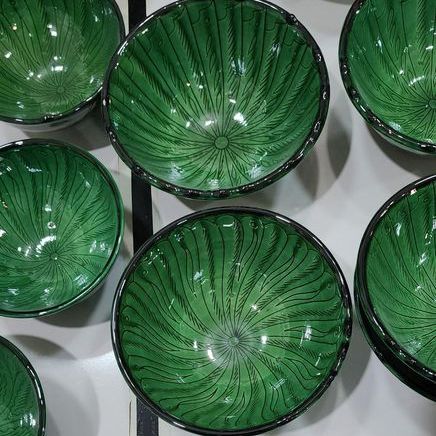
- Gijduvan ceramic pottery, which began in Bukhara in the 3rd century AD, is renowned for its distinctive floral patterns in shades of green, brown, and blue.
- Another important ceramic centre is Rishtan, famous for its signature blue glaze known as
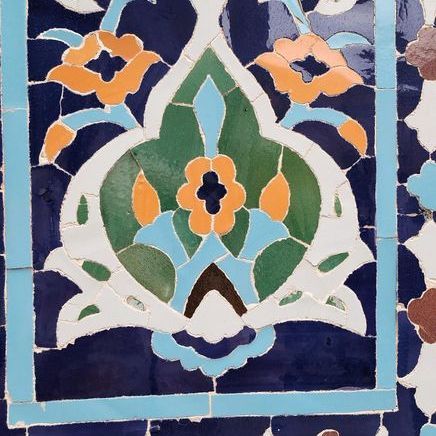
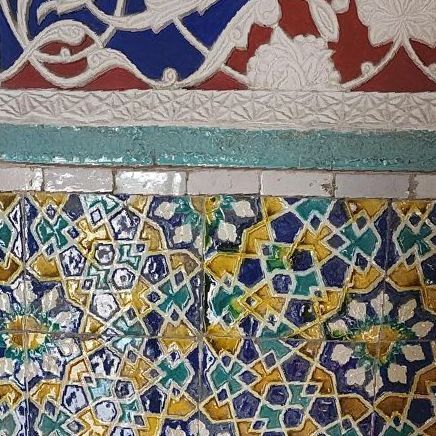
Ishkor. This natural dye, derived from plant ash, has been used since the 8th century. The striking blue and turquoise hues produced with Ishkor have become a much-desired feature in Uzbek ceramics and architecture alike.
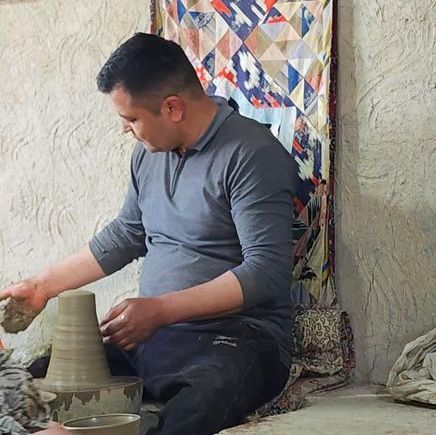
We plan to meet the makers - often families who can trace their craft through generations, preserving and evolving the techniques and traditions of Uzbek ceramics.
Alongside these personal encounters and time taking hands-on workshops, we’ll explore the rich history and culture of the region.
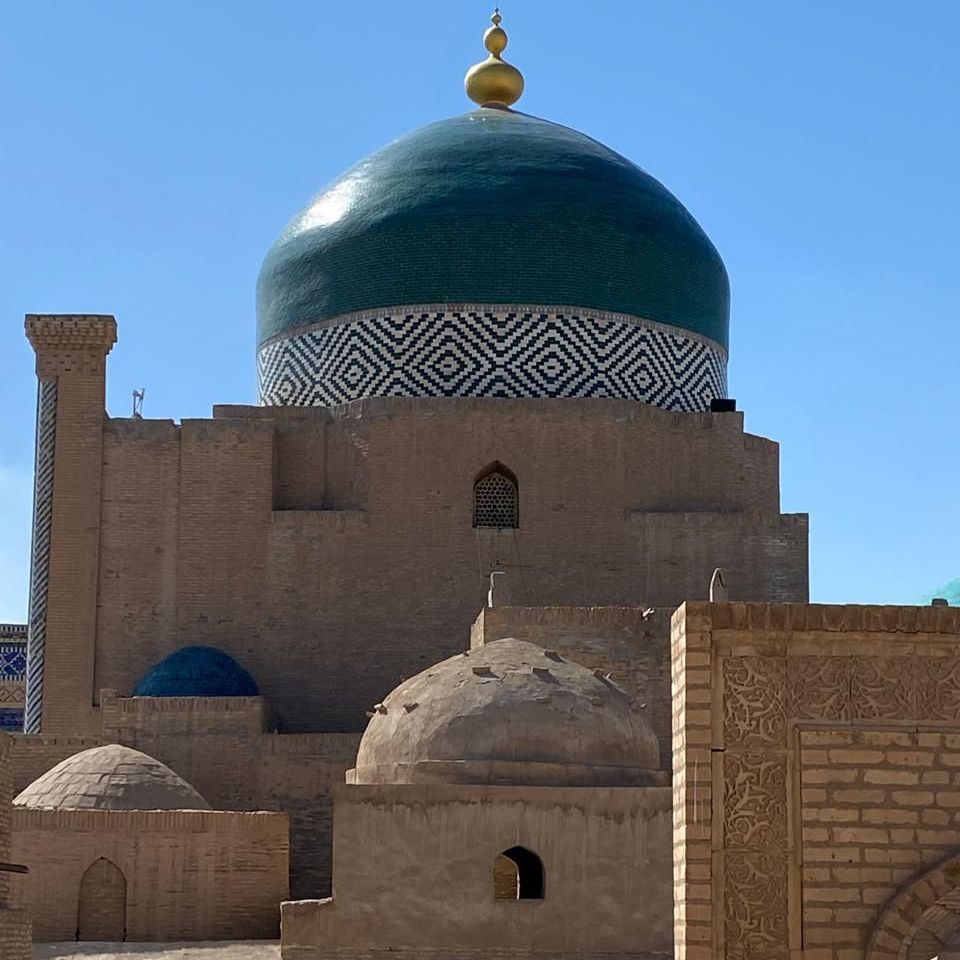
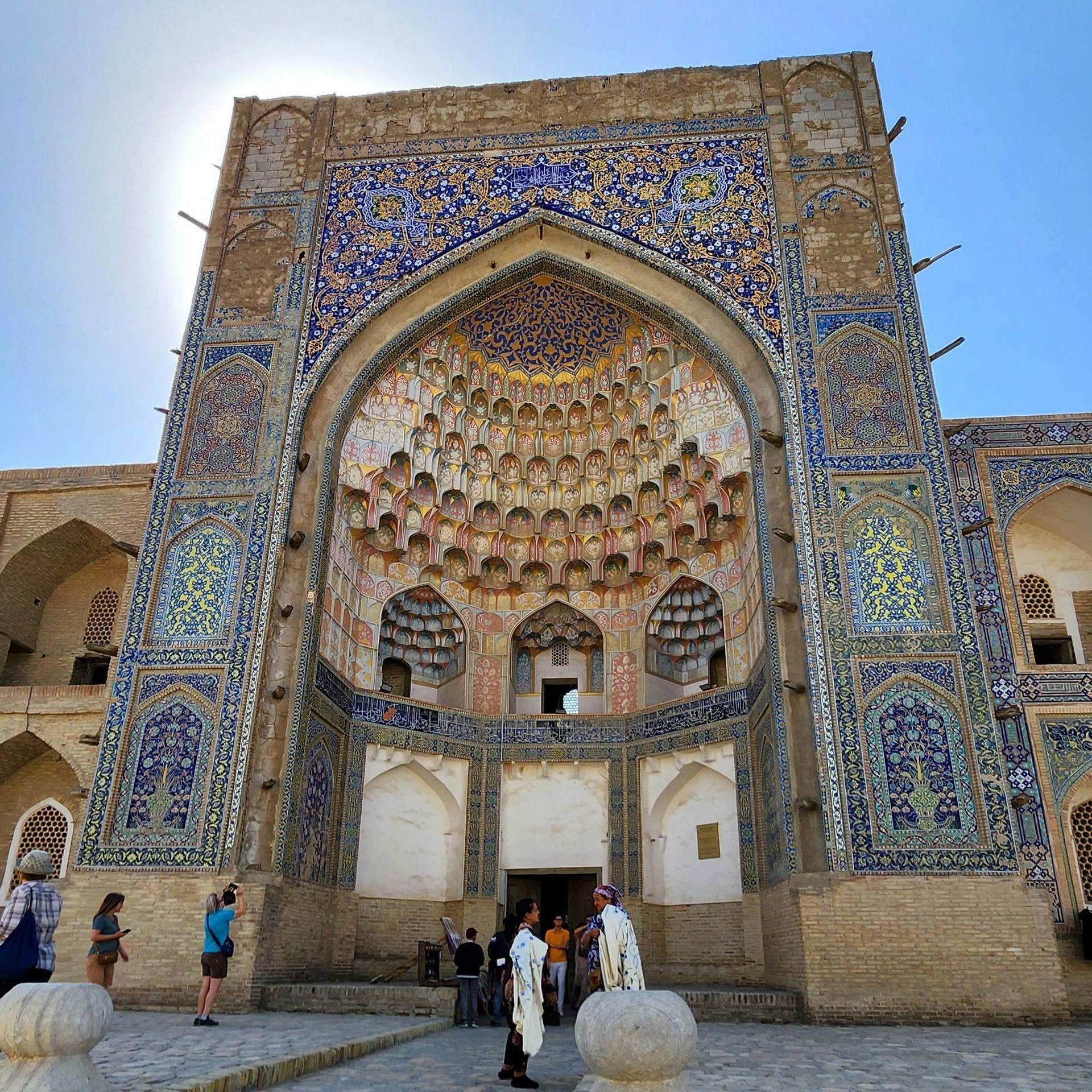
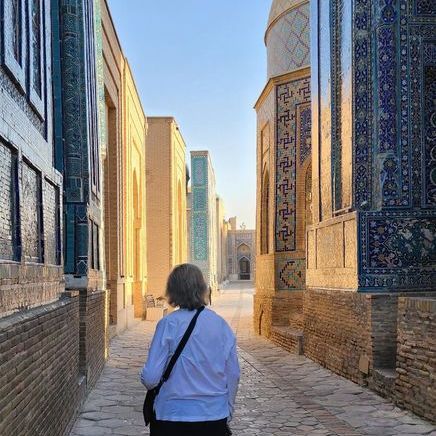
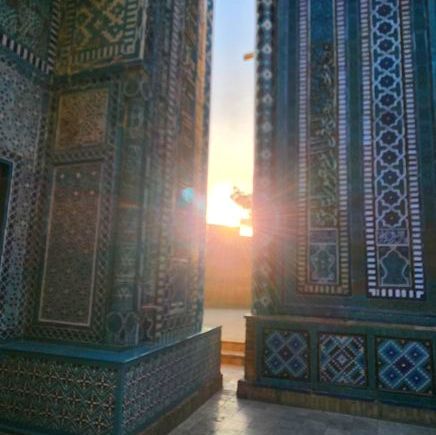
Can't miss visiting some of Uzbekistan’s most inspiring monuments, many of them encrusted with stunning tiles in the iconic blue and turquoise hues that define the country's artistic heritage.
Optional add-on
Aral Sea Extension.
Since the 1970s, the Aral Sea has been drying up—an ecological tragedy that gave rise to the haunting ship graveyard of Moynaq. Life has become incredibly difficult for the people living in the region, but change is in the air.
Come and experience this remarkable landscape: travel by 4WD across the old seabed, stay in traditional yurts, explore ancient ruins, and discover inspiring new initiatives focused on rejuvenating the area.
Day 1 - Tashkent, Uzbekistan (3 April 2027 )
Arrival at Islam Karimov Tashkent International Airport, Uzbekistan.
We’ll pick you up from the airport at any time, day or night.
There is no scheduled program today, as guests will be arriving throughout the day.
Hotel check-in time is in line with hotel policy, typically 2.00 pm.
Day 2 - Tashkent (4 April)
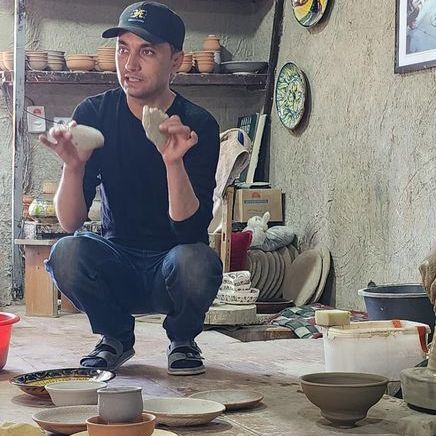
Let's dive into Tashkent's contemporary ceramics scene with a visit to the studio of innovative young ceramicist Sunjar. Originally from Samarkand, he has recently moved his studio to the capital, where he creates elegant teapots and beautiful bonsai planters. You will quickly discover that tea, and the teapot itself, sit at the heart of Uzbek culture.
Sunjar has also been developing a series he calls *Earth Plates* — slab-built bowls and platters embedded with rocks and minerals gathered from across Uzbekistan. Join him to create your own Earth Plate, choosing from his remarkable collection of stones and recording where each one was collected. A small but very special piece of Uzbekistan to take home with you.
Later we visit the Museum of Applied Arts, the perfect introduction to Uzbekistan's rich craft heritage. Wander through rooms filled with traditional ceramics, textiles, wood carving and embroidery, and begin to recognise the motifs and patterns that will appear throughout our journey.
This evening we gather for our Welcome Dinner, celebrating the adventures ahead.
B,L,D
Day 3 - Tashkent (5 April)
This morning we are guests at the Rakhimov Studio, where the family can trace their ceramic heritage back eight generations. They are artists, historians and master potters, and generously share not only their working studio but the story of Uzbek ceramics itself. We will explore changing styles, traditional techniques, historic glazes and the practical realities of making pottery today.
This afternoon brings a complete change of pace as we visit Anna and Anna in their delightful little studio. They create wonderfully quirky brooches and ceramic ornaments and will show us how they are made before inviting us to decorate the front of a brooch of our own. It will be glazed, fired, fitted with a pin and ready for us to collect later in the tour.
B,L
Day 4 - Kokund (6 April)
An early morning train to the Fergana Valley today.
We get off in Kokund in time for lunch at a local tea house.
Then we will meet Rustam and his family, their studio will be our workshop space for the next few days.
Today is an introductory session. We don't have time to make a piece from start to finish so we will be talked through their process, then choose a premade blank to decorate and glaze ourselves, once fired you'll have a pice to take home with you.
Today you will choose you base piece to work on tomorrow - perhaps you'd like to draw a design up tonight to use or work free hand when we come back in the morning.
B,L,D
Day 5 - Kokund (7 April)
We are off to the workshop today to add designs to our pieces.
If there is time we will poke around Risthan, there are many ceramics workshops.
B,L
Day 6 - Tashkent (8 April)
Time to explore Kokand and its history.
Kokand was the centre of a fabulously wealthy Khanate. It originated in the 10th century and reached its pinnacle in the 18th century.
When the Russians colonised the region, the Khanate was the last bastion of resistance, and much of its architectural heritage was wiped out.
We will visit the Palace of Khudayar Khan. It is quite different in style from the places we will see later. Much of the palace was destroyed by the invading Russians, and only 19 of the original 120 rooms still stand.
The Kokand Congregational Mosque is architecturally fascinating and now houses a cultural centre and artisan workshops, well worth a visit.
Metalwork, fine textiles, woodwork and ceramics are all significant crafts of the area.
Local markets are always interesting to explore. Fresh produce and people-watching make a good match.
We will gather some fresh bread, salads and local cheese for our train trip this afternoon.
If our pottery is ready, we will collect it before catching the afternoon train back to Tashkent. Otherwise, it will be delivered to us in Tashkent at the end of our trip.
B,L
Day 7 - Tashkent (9 April)
Slow start to the day - we will visit Sunjar to glaze our Earth Series pieces later in the morning.
After lunch lets visit the new Uzbekistan Contemporary Arts Gallery.
B,L
Day 8 - Bukhara (10 April)
Early morning flight to Bukhara, we will be collected by our mini-bus and head out to Gijduvan.
People have inhabited the region around Bukhara for at least five millennia, and the city has existed for half that time.
Located on the Silk Road, the city has long served as a center of trade, scholarship, culture, and religion. Bukhara served as the capital of the Khanate of Bukhara, Emirate of Bukhara and later Bukhara People’s Soviet Republic.
We are visiting a family workshop, these traditions have been handed from father to son through many generations. During the time of the USSR when private business was not allowed Abdulla and his father secretly made and fired small runs of plates to keep the recipes and skills alive in their hands. Today they welcome visitors from all over the world and generously share their craft.
Abdulla uses traditional methods and local raw materials in manufacturing ceramics. In his workshop, he and his family make more than 50 traditional forms on a pottery wheel and all glazes are prepared in house. Pieces are fired in a traditional kiln using wood, petroleum, or natural gas.
We will be shown all their processes, meet the donkey who grinds their glazes. He lives a privileged life, fed well and only one day of work each month!
Plates will be ready for you to paint with their beautiful earthy glazes. We will leave the pieces to be fired and collect them in a few days on our way to Samarkand.
We stay in the heart of the Old City of Bukhara.
B,L,D
Day 9 - Bukhara (11 April)
Today is special - we will visit Kushtak potter Roza.
Roza was quite surprised when we tracked her down and said we had a group of foreigner guests who would like to know about her work.
Kushtak aren't common and when you do see them they are often sold as a child's toy but there history is ancient and much more important than that.
They are shaped like fantasy or real animals. Sculpted from clay and fired, they are partially or completely decorated with polychrome painting. Some were additionally covered with glaze. Traditionally, khushtak are an element of the rituals of the Spring Equinox day, originating in folk beliefs and magic. Popular with Uzbeks and Tajiks, they are associated with the celebration of the Eastern New Year - Navruz.
According to ancient tradition, their sound was supposed to scare away an evil dragon, symbolizing winter. Some also believed that their whistle could cause the wind and then the rain needed to cultivate the land.
Roza is happy to invite us to her home, she will have blank forms ready for you to paint and take with you. May they chase the winter dragons from your home.
Her family will make us a home cooked lunch.
The afternoon is free.
If anyone is keen happy to take a walk across to the Ismail Samani Mausoleum.
It was used between 892 and 943 CE and is known for its detailed brickwork and served as the mausoleum for rulers of the Samanid dynasty. The structure is a significant example of early Islamic architecture and is one of the few surviving monuments from the Samanid era and is known as the oldest funerary building of Central Asian architecture.
It is just near the Bukhara Central Market so let's go over there and check out what is available- it is a great place for a little Street food research too.
B,L
Day 10 - Bukhara (12 April)
We will start with a Guided walk of Bukhara Ark and monuments.
The Ark of Bukhara is a massive fortress located in the city of Bukhara, Uzbekistan, that was initially built and occupied around the 5th century AD.
In addition to being a military structure, the Ark encompassed what was essentially a town that, during much of the fortress's history, was inhabited by the various royal courts that held sway over the region surrounding Bukhara.
The Ark was used as a fortress until it fell to Russia in 1920.
Later we visit a family workshop where the traditions of miniature painting are being kept alive. Miniature painting has a long and rich history throughout the Islamic world, and the great kingdom of Bukhara was once renowned for its royal ateliers.
During the Soviet era, this art form was forbidden, but today a new generation of artists is ensuring it flourishes once again.
We begin by visiting the family's traditional mulberry paper workshop, where we will learn how this beautiful handmade paper is produced. Then it is time to sit down with the artists themselves for a hands-on miniature painting workshop using traditional techniques.
After our creative morning, the family will prepare a home-cooked lunch for us, giving us time to relax, hang out and enjoy their hospitality.
B,L
Day 11 - Samarkand (13 April)
We will visit the Fayzulla Khodjaev Museum - this is a wealthy merchants family home built around 1880.
Fayzulla Khodjaev, himself grew up in privilege and he was sent to Moscow by his father in 1907. There he realized the tremendous gap between contemporary European society and technology, and the ancient, tradition-bound ways of his homeland, after his father's death in 1912 Fayzulla used is wealth to try to bring change to Bukhara.... after a long and twisted path he ended up in 1924, as the first Chair of the Revolutionary Committee of the Uzbek SSR – at which time he was recognized as the head of government.
However, Xoʻjayev opposed Joseph Stalin's heavy-handed control, particularly in the matter of cotton monoculture. Although he retained his post as head of government, from 1929 his influence and access to Moscow waned. In March 1938, Fayzulla was arraigned at the Trial of the Twenty-One in Moscow, found guilty and executed.
Drop by the pottery in Gijduvan for another great lunch and to pick up our fired plates and then off to Samarkand.
The area around the Registan is always lively, it is a beautiful monument and the people watching is excellent.
When we arrive we will drop our bags and head up to check it out on our way to dinner.
Samarkand is one of those places you have heard about all your life, and somehow it still exceeds expectations. It has been welcoming travellers for over 2,500 years, sitting at the crossroads of the Silk Road where ideas, cultures and crafts mixed together. The blue domes really are that beautiful, the tile work is extraordinary, and there is a wonderful feeling that this is still a city people live in, not just a place to admire.
Put on your walking shoes and let's explore. Around almost every corner there is something extraordinary waiting for us.
B,L,D
Day 12 - Samarkand (14 April)
A big day of sightseeing today - so many beautiful mosaiced monuments in Samarkand.
Early morning visit to Shah-i-Zinda - it is best early when it is quiet.
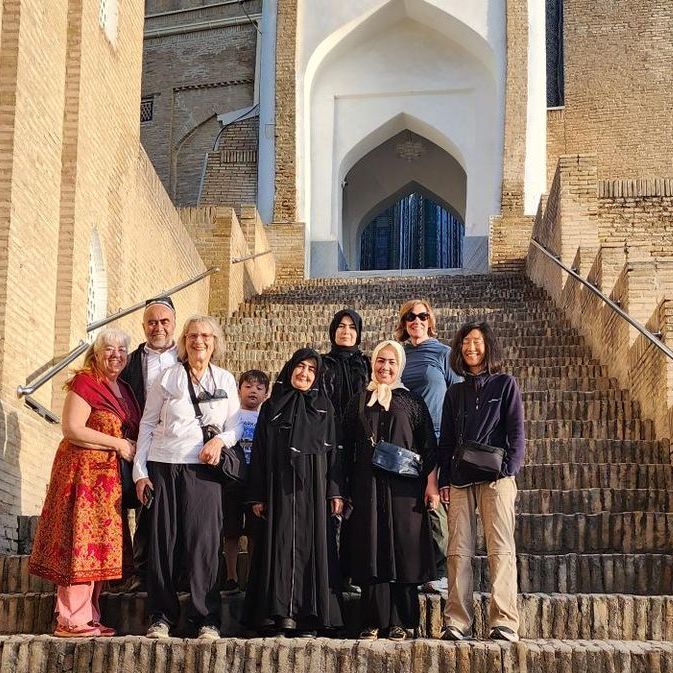
Shah-i-Zinda is one of the most sacred places in Uzbekistan and one of the finest examples of Islamic architecture in Central Asia. Its name means "The Living King", referring to the belief that Qusam ibn Abbas, a cousin of the Prophet Muhammad, was buried here after bringing Islam to the region in the 7th century. Over the centuries, rulers and wealthy families added magnificent mausoleums, creating a remarkable avenue of dazzling blue tiles and beautifully decorated facades.
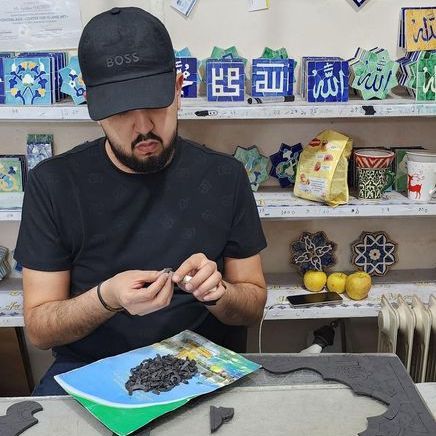
We'll have a guide to visit the Registan this morning, we also check out mosaic makers in Uglegbeg Madrassa,
Later we will walk down to the Bibi-Khanyan Mosque -a vast, partially restored ruins of an ornate 1400s mosque with a landmark, blue-tiled dome.
Lots of gossip surround the building of this mosque, I'm sure our guide will spill.
The Afrasiyab Museum stands beside the ruins of ancient Samarkand, one of the world's great archaeological sites. Long before the magnificent blue domes of the Timurid city, this was a thriving Silk Road settlement, occupied from around 500 BC until 1220 AD, when it was destroyed by Genghis Khan.
The museum was opened in 2007 to mark the 2,500th anniversary of Samarkand and tells the story of this earlier city through remarkable archaeological discoveries. Among its treasures are the famous Afrasiyab frescoes, uncovered during excavations in the last century, along with pottery that was made, decorated and fired hundreds of years ago. As potters, it is hard not to feel a connection with the hands that shaped these vessels so long ago.
A century after the destruction of Afrasiyab, Timur chose to build his magnificent new capital nearby, creating the Samarkand we know today.
B,L
Day 13 - Tashkent (15 April)
Off to Tashkent and our treasures await us, busy afternoon packing.
Let's share a final dinner together and celebrate our epic journey.
B,L,D
Day 14 - Departures (16 April 2027)
Departures from Islam Karimov Tashkent International Airport, Uzbekistan.
We’ll drop you to the airport to meet your flight.
Hotel check-out time is in line with hotel policy.
OR have a rest day and be ready to depart for the Aral Sea Extension tomorrow morning, bright and early.
B
Packing your Ceramics
The safest way to get your ceramics home will be for you to pack them safely and carry them yourself. Sending via courier is a risky undertaking.
Please bring bubble wrap and a sturdy carry bag suitable to carry your pieces home.
Although I have sent a parcel from both Hanoi & Tashkent with ceramics inside well bubble wrapped and wedged in with clothes and they arrived safely. Can't make promises, as you would understand, but did trial it.
Fitness
Physical Fitness for Sightseeing
This adventure is crafted for enthusiastic, active travellers with a good general level of health and mobility.
To make the most of your experience, you’ll need to be comfortable walking for 3–4 hours a day — sometimes over uneven ground, up hills, and climbing a few flights of stairs.
You may also find yourself getting in and out of local transport and navigating the occasional over-the-bath shower.
If you enjoy a bit of daily movement and love discovering new places on foot, you’ll thrive on this tour.
Just a friendly heads-up: we need to walk at an average pace - it will not be suitable for those who prefer a slow pace or need frequent rest stops.
Destination Details
Etiquette
• Be mindful of people’s privacy when taking photos
• Taking photos of people – how would you feel with a camera in your face?
• A good approach – people often enjoy a selfie; say hello, ask for a group selfie, show them, then ask for a portrait
• Learn a few local courtesies – always appreciated
________________________________________
Workshops
• Workshops are fully catered – we just need to turn up
• A small personal kit (needle and snips) can be useful
• Hosts often enjoy seeing something you’ve made
Art / Sketch
• A suggested materials list will be provided for sketching tours
________________________________________
Food
• Food is an integral part of culture – we are here to try it all
• Group meals are shared, with a range of dishes and local specialties
• Cooking is generally from scratch using fresh ingredients
• Uzbek cuisine is rich and meat-based
• Vegetarian / Vegan – very limited, especially outside major cities and in homes
o Expect salads, bread, and sides
o Consider bringing a protein supplement
• Dried fruits and nuts are plentiful in markets
• Wheat / gluten – manageable in cities; more limited on road days (plov, somsa common)
• Dairy – relatively easy to avoid
________________________________________
Health
• Drink only filtered or bottled water – not tap, even for brushing teeth
• Aim for at least 2 litres of water daily
• Visit your doctor or travel specialist before departure
• Bring required medications and prescriptions
• Menstrual products – pads available, tampons less so
________________________________________
Money
• Notify your bank before travel (including transit stops)
• Travel cards can be useful – check they work before departure (Wise generally reliable)
• Carry a backup card, stored separately
• ATMs – widely available and the easiest way to access cash
• Know your PIN – tap payments are not common
• Cash to exchange – USD easiest; other currencies less so
• Credit cards – not widely accepted
• Maestro and American Express generally not accepted
Currency
• Uzbek Som
________________________________________
Shopping
• There are treasures to find – textiles, ceramics, suzani, spices
• It supports the local economy
• Bargaining is standard in markets
• NGOs and social enterprises usually have fixed pricing
• If you’re after specific items, a little research helps
________________________________________
Suitcase
• Start with a medium suitcase and bring a soft bag for extra purchases
• Larger cases are harder to manage on buses
Recommended size
• Medium: 60–70 cm (H) x 40–50 cm (W) x 25–30 cm (D)
• Approx. 24–28" x 16–20" x 10–12"
• Not easy to buy luggage on the road
________________________________________
Weather
• Warm during the day, cooler mornings and evenings
• Generally dry – moisturiser is useful
• Sunny – a hat is helpful
________________________________________
Power
• 230–240 volts
• European adaptor plugs required
________________________________________
Clothing
• Lightweight, loose layers work well
• 3–4 outfits are usually sufficient
• Pack socks and a cardigan for cooler mornings
• A light jacket can be useful
• Modesty: skirts/trousers mid-calf or longer; shoulders covered
• A scarf is useful – for warmth, sun, or covering when needed
• Leave expensive jewellery at home
________________________________________
Shoes
• Comfortable walking shoes (sneakers or strapped sandals)
• Surfaces can be uneven – good footing matters
________________________________________
Laundry
• Any 2-night stop is a good opportunity
________________________________________
Fitness
• Frequent stops, getting on and off the minibus
• Walking is part of the experience – often 1–2 hours at a time
• Expect steps and uneven ground
________________________________________
Begging
• Rarely seen
• Avoid giving sweets or gifts to children – better to engage with a smile and a chat
________________________________________
Tipping
• Not common or expected for everyday services
• Restaurants – around 10% in more formal settings
• Set something aside for your driver
• A guide: the equivalent of a coffee per day, per person
• A group collection at the end works well
• Optional, but appreciated
________________________________________
Environment
• Step lightly – conserve water and power
• Take rubbish with you where possible
• Say no to plastic
• Bring a cloth carry bag
Booking Status
Bookings OPEN
Tour Location
Uzbekistan
Tour Information
Tour Pricing
- Share with a Friend: AUD $6150 each when booking two places at the same time, twin or double room share.
- Happy to share if someone is looking for a roommate.
- Private Room - Add AUD $1050
- Deposit: AUD $2460 due today secures your place.
- Early Bird Bonus: Book by 4 Sept 2026 to receive a $200 rebate.
- Triple Treat Bonus? Every 3rd trip earn AUD $300 discount and our appreciation.
Destination Notes- to help you prepare.
Inspirational Reading List.
Inclusions
Expert instruction by local artisans and workshop fees
Solo Traveller friendly
Fully hosted by our CAS teams with local guides
Carefully curated itinerary & well located accommodations
Internal flight
Airport pick up & drop off
All breakfast and most other meals
Exclusions
International Flights
Visa, if needed
Travel Insurance - read more
Laundry
Gratuities